
The Sky Above, the Rivers Below, Ch 18: Departure
Imran's cold account of 17th-century Bombay shatters Jamila. She realizes she is now a stranger to the home—and the son—she loves.
SERIALIZED FICTIONTHE SKY ABOVE, THE RIVERS BELOW
2/1/20268 min read
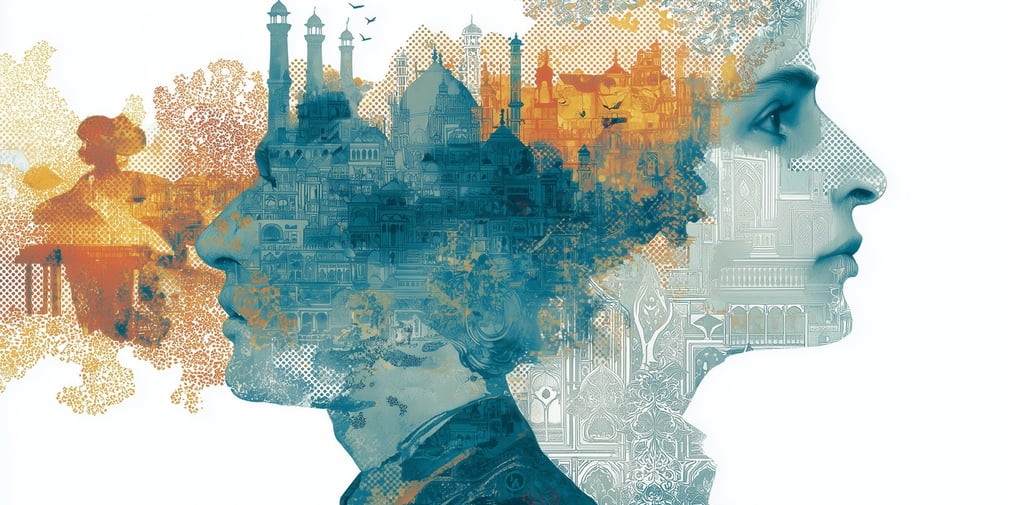
Jamila had always explained the world to her son. Now she lay tethered to her recovery suite, waiting for him to explain her own past back to her.
The Chronic medical facility calibrated nutrient drips to her body's exact needs. Bio-monitors charted her vitals in silence. White walls. Recycled air. She'd done nothing for days but lie there while her body mended from the illness that had nearly killed her. Her heart remained three centuries away. Bombay. Imran.
The alert chimed. Imran's face appeared on the wall screen.
Relief hit her chest like a fist. He looked tired, strained - but whole. Safe. He'd survived that primitive, chaotic past and returned. Her mother's instinct kicked in before thought could catch it.
"Imran, beta." Her voice rasped from disuse. "Are you well? Did you eat properly? That time - the air is not clean, the water is not safe. I told you to only drink the boiled water the Chronic officials provided, did you listen?"
"I'm fine, Ammi." His smile looked forced, weary.
Older. The few weeks in the 17th century had carved new lines around his eyes. He wore the functional clothes of their current time, but his posture carried ghosts - the restrictive Mughal-era garments he must have worn had left their mark in how he held his shoulders.
"I followed all your instructions. I am fine. Just... tired."
He settled into the visitor's chair. The sterile efficiency of the room fell away. Grief filled the space between them.
"Tell me." Her voice trembled. "Tell me everything, Imran. About Salim. The rites. Was it done properly? The way it should be?"
Images flooded her mind. The washing of the body. Rosewater. White cotton shroud. The solemn procession through bustling streets to the burial ground. Marigolds and incense at the mosque. Communal prayers. Food and sorrow shared among family. She needed to hear it. To experience it through his eyes. The only way she could truly mourn.
"I must hear it all, every detail." Her hands clutched the thin blanket. "So I can see it, so I can feel it. Tell me about our family. About your aunt, my sister Safia. About the cousins. Tell me what our home smelled like."
Sensory details. Small, grounding truths that would make this distant, abstract loss real.
Her son, the child of the future - her window into a past she could no longer touch. She braced herself. Welcomed the coming pain as necessary. A way to honor her beloved brother across the vast, silent gap of time.
Imran began to speak. His voice stayed low, hesitant. His gaze drifted toward the featureless white wall as if replaying scenes there.
He described the funeral. The great outpouring of grief from family and community. The crowds, the sounds, the rituals.
Wrong. All wrong.
The details were there. His view was alien.
"Overwhelming crowds." "Lack of sanitation" in the streets during the funeral procession. His fear of "rampant potential for disease." The communal meal - a "high-risk food-handling situation" that had made his stomach churn.
The Bombay Jamila remembered: vibrant, chaotic, teeming with life. A city whose smells - spice, sea-salt, humanity - were the scent of home.
In Imran's telling: "filthy," "unhygienic," "dangerous."
A knot tightened in her chest. Confusion. Rising defensive anger.
The streets were alive. The air filled with the scents of living. He spoke of her beloved Bombay as if it were backward, savage - a problem to be analyzed and solved. He sounded like a Chronic official assessing the flaws of a primitive time.
Had this future poisoned his memory? His very soul?
"The house, Ammi." He shook his head slightly, dislodging a bad memory. "It was so dark. So small, smaller than I remembered from your stories. The rooms were stuffy. No proper ventilation, no real plumbing to speak of. The smoke from the cooking fires seemed to cling to everything."
Her ancestral home - a grand, airy haven filled with the laughter of dozens of relatives, a bustling hub of business and family life - described as a dark, unsanitary shack.
"Aunt Safia... she was kind, but..." He hesitated. "They are all so superstitious, Ammi. They had a dozen rituals just to ward off the evil eye from me, the 'traveler from afar.' And the social rules - so rigid. The way the women were separated, the way everyone deferred to the eldest uncle, even when his opinions made no logical sense. It was difficult to navigate."
They'd treated him as a strange, fascinating creature. Marveled at the simple, Chronic-issued water purifier he'd brought. Whispered about his accent. The Hindi he spoke too pure, too clean - lacking the local dialect's familiar rhythm. An outsider. A curiosity from a far-off land of unimaginable magic. Connected by blood. Not by spirit.
He spoke of their confusion, their inability to grasp his reality. Revealed his own deep inability to truly grasp theirs. Seeing their world through a lens of cultural flaws, a historical data-set to be observed and criticized.
The image Jamila had held for fifteen years - vibrant, warm, loving family and home - unraveled thread by painful thread. The Bombay she'd mourned, longed for, breaking apart. Replaced by this distorted, clinical reflection from the future.
Sharp pain. Disorienting.
This wasn't the clean grief of losing her brother. This was messy, confusing agony - losing her entire past. Having it rewritten, devalued, made alien by the child she'd pushed into this new world.
The desperate need to defend it rose in her throat. No, that's not how it was. You are not seeing it right.
But how could she argue with his experience? He'd just been there. Her witness. His testimony breaking her heart.
"There was something else, Ammi." Imran's voice dropped. His gaze finally left the sterile white wall to meet hers. Deep discomfort showed in the set of his jaw. His modern ideas clearly struggled with the raw, unfiltered emotion of the memory. "The day before I was scheduled to leave... Aunt Safia, she took me aside."
Jamila's heart tightened.
Safia. Her younger sister. The one she'd been closest to. Her letters - before Chronic's messaging service became too costly and unreliable - had been filled with awe, envy, sharp teasing wit.
"She wanted to give me a message for you." Imran's words came careful, measured. "She was very upset. Not just about Uncle Salim's passing, but about you. About me being there instead of you."
He took a breath, then relayed the words. The chip in his brain translated Safia's passionate, emotional Urdu into the calm, precise Hindi of his advanced time. The translation made the words feel colder. Sharper.
"'Tell my sister...'" He quoted without feeling, as if trying to distance himself from the sentiment. "'Tell my sister that her grand future has made her forget her duties. Tell her that while she lives a life of unnatural ease, surrounded by magic and comfort, her brother lay dying. Tell her she sent a stranger to mourn in her place.'"
Stranger.
The word struck like a blow. Her son. Her heart. A stranger to her own sister.
Imran pushed on. His face tight with discomfort, the messenger of pain. "'Tell her this boy' - she meant me, Ammi - 'with his strange, flat speech and his fear of honest dirt, he is not one of us. He looks upon our ways with the eyes of an outsider, a Company man passing judgment. He does not belong here. And tell her this, Jamila... tell her that if this boy is what her future has made, then she, too, is no longer one of us. You have forgotten us, sister. You have sold your blood, your past, for what? A longer life in a land without a soul?'"
The words hung in the sterile air.
Brutal. Searing. An accusation from a world away, from a lifetime away.
A knife in her heart. Sharp. Breath-stealing. She could almost hear Safia's voice, see her flashing, angry eyes.
Worse - the expression on Imran's face. Delivering the message with a heavy heart, yes. She could see that. But beneath the son's duty, something else flickered.
Understanding. Almost agreement.
"She doesn't understand, Ammi." Imran tried to soften the blow. His choice of words only made it worse. "She can't understand the medical needs that kept you here. She sees the lack of sanitation, the disease, the superstitions, as normal. As just 'the way things are.' She can't see that coming here, that giving me this life, was a way to escape all that. She thinks you abandoned them, but really, you saved us."
His defense confirmed Safia's accusation. He was defending her from the "backwardness" of their home. Not from the pain of a sister who felt abandoned. He couldn't truly defend their family's ways because - as his entire story had made clear - he didn't understand or value them as she did.
He saw their traditions as problems overcome. Their faith as superstition. Their way of life as something to be escaped. In his attempt to comfort her, he revealed the full, unbridgeable gap of his own alienation.
A fresh wave of horror washed over her.
He sees me as they do now. A woman who left, who changed. He doesn't see the sacrifice, only the distance. Doesn't see a rich, vibrant culture she was forced to leave - he sees a primitive world she was lucky to escape.
This future hadn't just taken her from Bombay.
It had taken Bombay from her son.
Safia was right. The boy she'd sent in her place - a stranger to them.
Perhaps becoming a stranger to her, too.
The conversation forced Jamila to a devastating conclusion. A final, internal breaking point.
She couldn't go back physically because of her frail health. That truth she'd known.
The terrible, irreversible truth: she could never truly go back at all.
The home she'd kept in the amber of her memory, the Bombay of her heart - a phantom. A place of vibrant community, cherished traditions, unquestioned status. Imran's report, delivered with the cold, clear eyes of the future, had covered her beautiful memory with stark reality. Filth. Disease. Suffocating social rules and casual cruelties. She'd once accepted these as normal. After fifteen years of clean air, advanced medicine, and a different social contract, she would see them as unbearable.
If she were to return, she knew with sickening certainty - she too would see the dirt. She too would pull back from the lack of sanitation. She too would be frustrated by the rigid, unquestioning social order. She would see her beloved home with the eyes of Jamila, the temporal migrant from a hyper-advanced future. Not with the eyes of Jamila of Bombay.
Her own family saw her as a stranger now. A traitor who had abandoned them for a life of "unnatural ease."
The most painful part: in their own way, they were right.
She had changed.
Fifteen years in this new world hadn't been a waiting period. They'd been a slow, sneaky process of transformation. Her view, her feelings, her very understanding of what made a good, safe, and dignified life - fundamentally rewired.
The home she'd mourned and longed for was gone. Not because it had changed.
Because she had.
Her longing was for a ghost. For a version of herself that no longer existed.
The grief that washed over her ran deeper, more hollow, than the sorrow for her brother's death. That had been a natural loss, a part of life's painful cycle.
This was grief for a lost self. A lost world. A lost sense of belonging that could never be reclaimed.
She was truly, irreversibly adrift. Floating in the currents of time.
She looked at Imran. Her beloved son. Her reason for everything.
He sat there, his face filled with genuine concern. Shallow concern. His mind already drifting back to his coded worlds, to problems he understood and could solve. A child of this future. A stranger to her past. Their shared experiences - a thin, fragile bridge over a vast and growing canyon of difference.
Her heart ached with love for him. With the devastating knowledge of the distance between them.
Her only true home was this fragile, uncertain present. This sterile recovery suite. The son who was both her greatest treasure and a living symbol of all she had lost.
The only true family she had left: this small, fractured unit, floating in a time that would never fully be theirs.
No way back. No grand homecoming to look forward to. No ancestral soil to which she could ever truly return.
Only this room. This moment. The uncertain, unwritten path forward.
For the first time since leaving Bombay, Jamila Ahmed felt the full, crushing weight of what it truly meant to be lost in time.
***
Updates
Follow for the latest on my stories.
Fiction
contact@msrayed.com
© 2025. All rights reserved.
My Substack: https://msrayed.substack.com
My Patreon: https://www.patreon.com/cw/MSRayed