
The Omission Index, Ch 22: Blue Room Pt. 1
SHEPARD agents track a sonic anomaly in Memphis. A blind bluesman’s sorrowful songs have become a weapon, paralyzing crowds with mass grief.
SERIALIZED FICTIONTHE OMISSION INDEX
2/9/20269 min read
1982
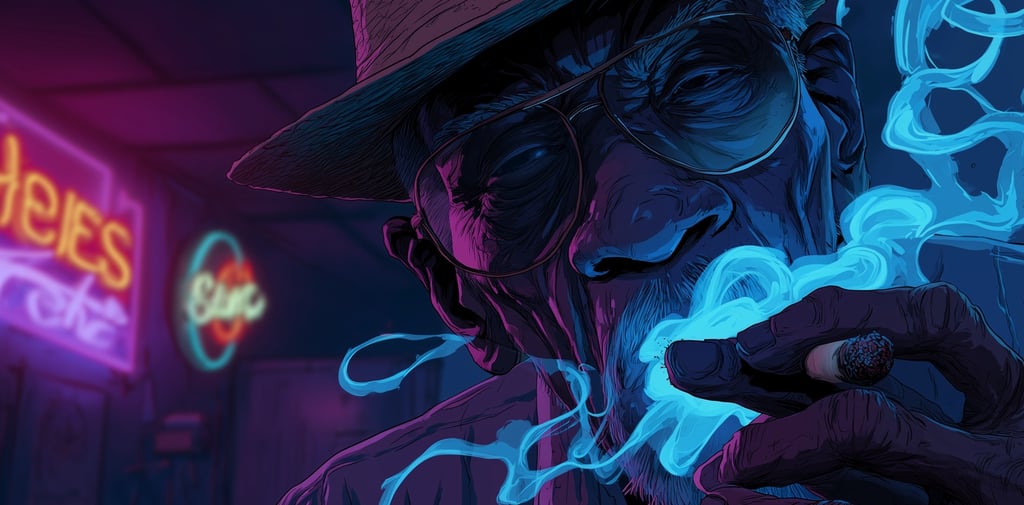
The juke joint air tasted of spilled beer and dollar-store perfume. Henderson sat in his corner booth, nursing watered whiskey, watching his tenants dance like fools. The Daisy Lane couple - three days late on rent - laughed into each other's necks. He'd pay them a visit tomorrow. Remind them what happened to people who wasted money on Saturday nights they couldn't afford.
The music grated. Always did. Noise dressed up as art, wailing and moaning like the world owed these people something.
An old man shuffled onto the shaky stage. Henderson recognized him vaguely - Blind Gideon, a regular in these dives. Roadmap face, milky eyes, battered harmonica catching the dim lights. The bluesman settled onto a wooden stool without a word, raised the instrument to cracked lips.
The first note punched Henderson in the chest.
Not music. Something else. The room's laughter died mid-breath. Conversations severed. The sound didn't enter through his ears - it burrowed straight into bone, into the hollow spaces between ribs where he kept things buried.
Gideon's voice scraped out, low and ancient. Each word carried weight that made Henderson's throat tighten. Lost loves. Broken backs under Mississippi sun. Dreams rotting in delta mud.
Henderson opened his mouth to sneer at the barfly beside him. Nothing came out.
Cold spread through his chest. An ache he didn't recognize, had never felt, had maybe spent fifty years making sure he'd never have to feel. The harmonica wove something unbearable, and the air thickened, pressing down like wet wool.
Grief hit him.
Not his. Too vast for that. Ancient sorrow, collective weight of generations crushed into a single moment. Behind his eyelids: chain gangs under brutal sun, a mother keening over unmarked dirt, young dreams shattered by a white man's casual word.
Then it sharpened. Focused. Became his.
Every eviction notice. Every cold dismissal. Every tenant's desperate face he'd turned away from. The woman who'd begged for one more week, her kids sick, and he'd said no because principles mattered more than children. His wife's disappointed eyes - that look she'd worn for years before the cancer took her, the look that said she'd married a man and woken up beside a calculator.
A sob tore from his throat. Hot shame streaked his face. He tried to stand, run, but his legs were lead. The sorrow drowned him. Every nerve screamed. This was his life - the petty, grasping, loveless waste of it - reflected back with unbearable clarity.
Around him, others broke. The Daisy Lane couple clung together, weeping. The bartender stood frozen, tears cutting through sweat. Even the hard cases slumped in their chairs, faces twisted with incomprehension.
Only Blind Gideon remained untouched. Milky eyes fixed somewhere distant. Harmonica wailing. Voice channeling Mississippi-deep sorrow.
The song faded. The last note hung in charged air like a curse.
The weight lifted slowly, painfully. Henderson could breathe again. Move. But he was hollowed out, heart a raw wound. He looked at the other tear-streaked faces and saw something new, something terrifying: shared humanity.
The blue note echoed permanently in the deepest room of his heart.
***
The folder hit Reid's desk like a punch. Express mail from SHEPARD's Memphis contact at St. Francis Hospital. Subject line: "Recurrent Localized Mass Psychogenic Events – Beale Street Entertainment District – Request for Anomalous Cause Assessment."
Psychogenic. Doctor-speak for "we're freaking out."
He skimmed the reports. Multiple incidents. Always Beale Street blues clubs. Groups of people - sometimes dozens - overcome simultaneously by sudden, disabling emotional distress. Witnesses described collapse, uncontrollable weeping, temporary paralysis, sometimes catatonia. The main emotion: overwhelming grief and despair. No violence. No injuries beyond falls. Effects lasted for the duration of a song, then gradually faded, leaving victims shaken, disturbed, with no memory beyond "the music."
Memphis PD was chasing phantom drug dealers. Hazmat teams found nothing. Toxicology came back clean. Their working theory: "blues-induced mass hysteria."
What caught Reid's attention were the audio recordings. Poor quality cassettes from terrified patrons before they too succumbed. Beneath the screams and confusion, his analysis programs isolated recurring low-frequency sounds and a distinct rhythmic empathic energy signature. The spikes matched precisely when the "mass hysteria" started.
This wasn't people getting emotional at sad songs. This was directed. Focused. Weaponized.
He ran the signatures against SHEPARD's database. No direct matches, but the combination - sound projection plus empathic amplification - was unique. And dangerous if weaponized. A sonic weapon causing mass emotional paralysis had A.G.I. written all over it.
***
The briefing was tense. Hale looked like he hadn't slept in weeks, stress lines carved deep around his eyes. The divorce was eating him alive. When Cromwell detailed the Memphis anomaly - overwhelming grief waves, mental paralysis - Hale flinched. Almost imperceptible, hand touching his temple briefly. "Overwhelming emotional assault" was landing too close to home for their mental reader.
"Local PD thinks designer drug or psychological contagion," Cromwell said. "SHEPARD's preliminary analysis suggests otherwise. We're looking at a potential Level Three Sonic Empath, possibly higher, capable of projecting disabling emotional trauma onto multiple targets simultaneously. Delivery system appears to be musical performance."
Knopff grunted. "Guy who can make people cry themselves into a coma with a sad song. That's new."
"The weaponization potential is significant." Cromwell's tone sharpened. "Imagine this scaled up. Crowded stadium. Political rally. Military installation. We need to identify the source, assess abilities, and contain them. Quietly." He looked at Hale. "Agent Hale, your psychic sensitivity will be crucial. But given the emotional intensity reported, exercise extreme caution. We can't afford to have you compromised."
Hale nodded, expression unreadable. Reid saw the tremor in his hand picking up the briefing folder. This case was going to wreck him. Walking into weaponized grief when your own emotional landscape was already scorched earth.
"Kwan, you'll manage affected civilians and establish dialogue with the suspect. Reid, full spectrum analysis of sonic and empathic signatures. Identify weaknesses, countermeasures. Knopff, containment and security. This suspect incapacitates multiple individuals without physical contact. Standard protocols may not apply."
As they gathered gear, Reid pulled Hale aside. "You good? This sounds custom-built to mess with your head."
Hale gave him a tight smile. "Always good. Just another day."
His eyes told a different story. Frayed nerves. Sleepless nights. A man on a precarious tightrope.
Reid hoped the rope wouldn't snap on Beale Street. Because the blues they were about to encounter were more than music.
They were a weapon. And Hale was walking right into its sights.
***
Memphis hit Hale like a fist. The heat was thick, humid, but that wasn't it. The sound. The history. The deep, resonant mental hum pressing in on him from all sides.
The city was saturated with echoes of generations. Joy pulsed from music spilling out of doorways - vibrant, defiant - but beneath it ran an ocean of grief. Pain. Struggle. Resilience almost touchable. It lived in faded cotton warehouses, in weary faces on the street, in the very stones.
Beale Street itself was sensory overload. Neon signs. Clashing blues riffs. Barbecue smoke and stale beer. A performance of noisy fun. But beneath it, raw truth. Mental tapestry woven from hardship, fleeting joy, lasting sorrow. Ghosts of a thousand heartbreaks lingered in every doorway, mournful songs carried on humid breeze.
His own internal state - already frayed by Susan's lawyers - tuned dangerously to the city's frequency. The usual ringing in his ears, byproduct of his abilities, grew louder. Persistent whine counterpointing the blues.
***
Captain Beaufort was a large man with tired eyes and a handshake like worn leather. His office overlooked Beale Street's controlled chaos. He listened to their vague SHEPARD introduction with skeptical weariness.
"Mass hysteria, Feds." His Southern drawl was thick. "That's what my boys are callin' it. Folks on Beale Street, they get emotional sometimes. The music, the drink. But this is different. People droppin' like flies, cryin' their eyes out, scared half to death, then comin' 'round an hour later swearin' they don't know what hit 'em. We thought angel dust, some new synthetic, but tox screens come back clean."
Kwan asked about specific locations, timing, common factors. Beaufort provided a list - The Blue Moon, The Crossroads Tavern, The Cottonmouth Lounge - all within blocks, all serving similar crowds, all experiencing at least one "grief attack" in the past month.
"The only thing they got in common is the blues. Real deep, mournful stuff. Makes you wanna drink yourself into next week." He scratched his chin. "And there's this old fella, Blind Gideon, plays at most of 'em. Damn good, if you like that sort of thing. Always draws a crowd. Usually on stage when these episodes kick off. But hell, he's just an old blind musician."
Hale felt a cold prickle. The name resonated with a faint mental disturbance he'd picked up from the initial dispatch. Wrong note in the city's sorrowful hum.
They met Dr. Ian Young next. ER physician, younger than Beaufort, eyes holding horrified disbelief.
"Like nothing I've ever seen, Agent Hale." His voice was tight. "They come in with acute catatonia, crying, making involuntary sounds - moans, whimpers. Vitals stable but low. The psychological distress is profound. When they start coming around, they're disoriented, terrified. They describe experiencing overwhelming grief. Loss. Despair. Like every sad thing that ever happened in the world just hit them at once." He shivered. "One fellow, big tough-looking guy, just lay there sobbing for his mama. Said he felt like his soul was being torn out."
Hale listened. The descriptions mirrored raw, amplified emotions he experienced when mentally connecting with deep trauma. This wasn't music making people sad. This was weaponized emotional assault. The thought of that raw grief being broadcast, forced upon unwilling minds, made the dull ache behind his eyes - constant companion since divorce proceedings began - throb with sharper intensity.
Outside, humid Memphis air pressed heavier. The vibrant music spilling from bars no longer sounded like joy or resilience. Now it carried something more unsettling. A potential channel for sorrow so deep it could silence, paralyze, destroy.
Familiar irritability prickled at the edges of his control. Mental chafing against the city's overwhelming emotional tide.
This case was going to be an unpleasant dive into the deepest wells of human suffering.
His carefully built defenses felt dangerously thin.
***
The eviction notice tacked crookedly to peeling paint felt like another lash. Mr. Alistair Henderson wanted him out. Wanted all of Daisy Lane out. The ones who scraped by on too little hope and even less money. Henderson wanted them gone so he could tear down their homes, build something shiny and new, make himself richer, erase another piece of their shared history.
Gideon ran gnarled fingers over the cheap paper. The raised lettering of Henderson's name felt like a brand. He couldn't see the words - river fever had taken his physical eyes decades ago. But he could feel them. The cold arrogance behind them. Casual cruelty. Utter lack of empathy for lives about to be turned upside down.
He could feel Mrs. Walker's fear down the hall, her husband having lost the mill job. Young Thomas's quiet despair, raising two kids alone while Henderson's rent climbed like relentless weed.
He moved slowly through his sparse room. Dust, old wood, faint pipe tobacco - small comfort. His battered acoustic guitar leaned in the corner, wood scarred and worn smooth. His harmonicas lay nestled in faded velvet on the bedside table.
These were his true eyes. His true voice.
Gideon had a gift. Or curse - he wasn't sure which. He felt it all raw and unfiltered. Absorbed the background sorrow of a place, unspoken griefs of its people, lingering echoes of past injustices. It settled in his bones, his blood. Constant ache.
Memphis, especially Beale Street, was a symphony of sorrows. River of blues flowing through him day in, day out. He'd learned not to drown in it, but to channel it. Give it voice through music. His blues weren't just songs. They were testimonies. Releases. The collective heartbeat of people who'd learned to sing their pain because screaming was too dangerous.
But lately something had shifted. The weight - the endless grinding injustices, Henderson's sneering cruelty - had become too much to simply sing about. A new note had entered his music. Righteous anger. Desperate need not just to express the pain, but to make them feel it. The ones who caused it. The ones who walked through life protected by money, privilege, deliberate blindness.
He picked up his favorite harmonica. Hohner Marine Band, with him more years than he could count. He didn't need to see it. He knew every curve, every dent, every imperfection.
He raised it to his lips. The first note wailed low and mournful, carrying centuries of weight. He let Daisy Lane's sorrow flow into him - Mrs. Walker's fear, Thomas's despair, the quiet desperation of a dozen families facing Henderson's notices. Echoes of his own past. Sting of countless slights. Weariness of a lifetime spent on society's edges.
Then he shaped it. Focused it. Wove it into a melody not of release, but of reflection. A mirror of sound, designed to show men like Henderson the true, ugly face of suffering they casually inflicted. He didn't want to hurt them the way they hurt others. Didn't want to break bones or steal money.
He just wanted them to understand. To feel, just for a few agonizing minutes, the crushing weight of sorrow they dealt out so freely. Forced, unwelcome empathy.
His actions in the clubs were escalation. Dangerous. But what else was left?
Words didn't reach men like Henderson. Pleas for mercy met sneers. The law was distant, indifferent. Only feeling - raw and overwhelming - seemed to get through their calloused hides.
He played on. Notes bending, crying, soaring. Song for lost dreams. Testament to enduring pain.
He was Blind Gideon, the bluesman. His music was a weapon, forged in fires of lifetime sorrow, aimed at hearts of those who'd forgotten they even had one.
Desperate, righteous anger. Final, defiant chord played against a world determined to silence the blues and the people who sang them.
Updates
Follow for the latest on my stories.
Fiction
contact@msrayed.com
© 2025. All rights reserved.
My Substack: https://msrayed.substack.com
My Patreon: https://www.patreon.com/cw/MSRayed